For decades, the cry of “freehold forever!” has rung as the sacred gospel of property investment. It represents permanence, legacy, and an almost spiritual rejection of finite ownership. Freehold owners pay a substantial premium for this security, believing they have conquered the asset decay curve.
But in the fast-paced, high-density reality of modern urban centers, this traditional wisdom is rapidly becoming an expensive anachronism. The savvy investor today understands that true value lies not in perpetual ownership, but in financial optimization, liquidity, and prime location.
Attention: Lentor Gardens Residences debuting in 2H2026
Table of Contents
1. The Myth of the Perpetual Asset
The core premise of freehold—that the land is yours forever—often fails in practice. A 40-year-old freehold property, while permanent in tenure, is decaying physically and functionally.
- En Bloc Hurdles: Freehold properties often consolidate into smaller, fragmented developments. Achieving the 100% consensus (or 80% threshold for old developments) required for an en bloc sale is notoriously difficult, leaving owners stranded in ageing, high-maintenance estates with zero immediate exit plan.
- The Premium Trap: The price difference (quantum premium) paid for freehold status is capital that could have been deployed elsewhere for yield. If the freehold property only appreciates as much as, or marginally better than, a newer leasehold property, the opportunity cost of that locked-in premium crushes the overall return on investment (ROI).
2. Location is King, and the Crown Belongs to Leasehold
In highly structured urban landscapes, the best land is almost always controlled by the government and released via mechanisms like the Government Land Sales (GLS) program. These parcels are leased for 99 years.
This means that developments occupying the most integrated, transit-oriented, and commercially viable locations—such as parcels sitting directly above MRT interchanges, next to integrated malls, or within newly designated growth corridors—are inherently leasehold.
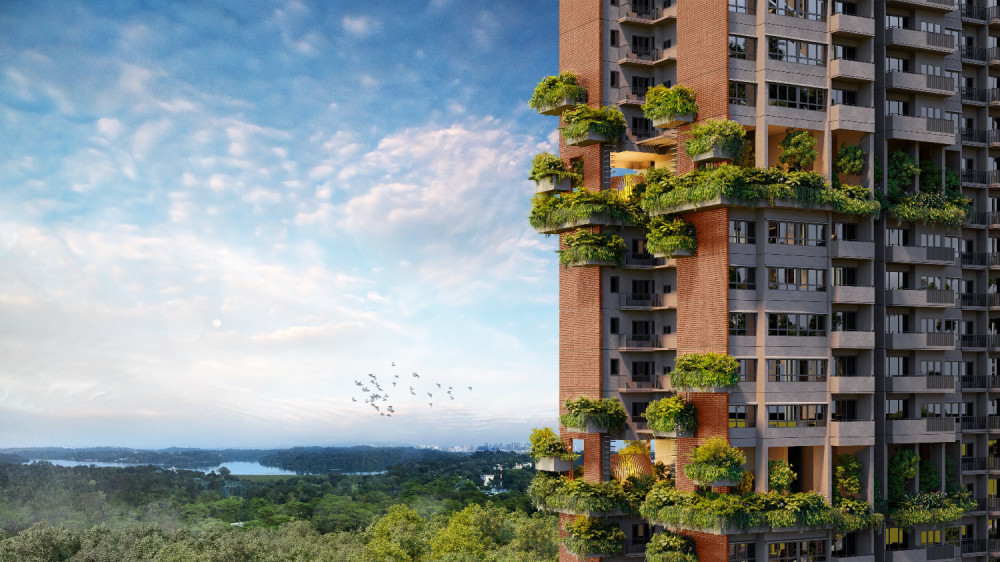
A newer leasehold condo, Lentor Gardens Residences, often provides:
- Superior Connectivity: Direct access to major transport nodes and expressways.
- Modern Infrastructure: Built with current zoning laws, sustainable practices, and integrated amenities (smart home systems, dedicated co-working spaces, automated parking).
- Ambitious Amenities: Developers bidding on prime 99-year land are motivated to build large, ambitious, resort-style complexes to maximize profit and appeal, something often impossible in a smaller, older freehold land plot.
3. The Financial Case: Lower Quantum, Higher Yield
The most decisive argument for the 99-year leasehold is financial efficacy. For an identical location and size, a leasehold property will typically carry a 15% to 30% lower quantum than its freehold counterpart in the primary market.
| Financial Indicator | Leasehold Advantage | Impact |
| Lower Quantum | Reduced upfront capital outlay. | Easier entry point for first-time buyers; better diversification potential for investors. |
| Higher Rental Yield | Revenue divided by a lower purchase price. | Leasehold properties frequently boast 0.5% to 1.0% higher gross rental yields than freehold peers, generating superior passive income. |
| Liquidity & Exit | Larger pool of potential buyers. | The lower price makes leasehold units more accessible, ensuring better transactional liquidity in the resale market, especially within the first 60 years of tenure. |
Conclusion: The New Definition of Value
The 99-year leasehold is not an inferior asset class; it is a deliberately optimized asset class built for the density and mobility demands of the 21st century.
For the modern buyer, the choice is no longer between ownership and tenure, but between opportunity cost and emotional security.